
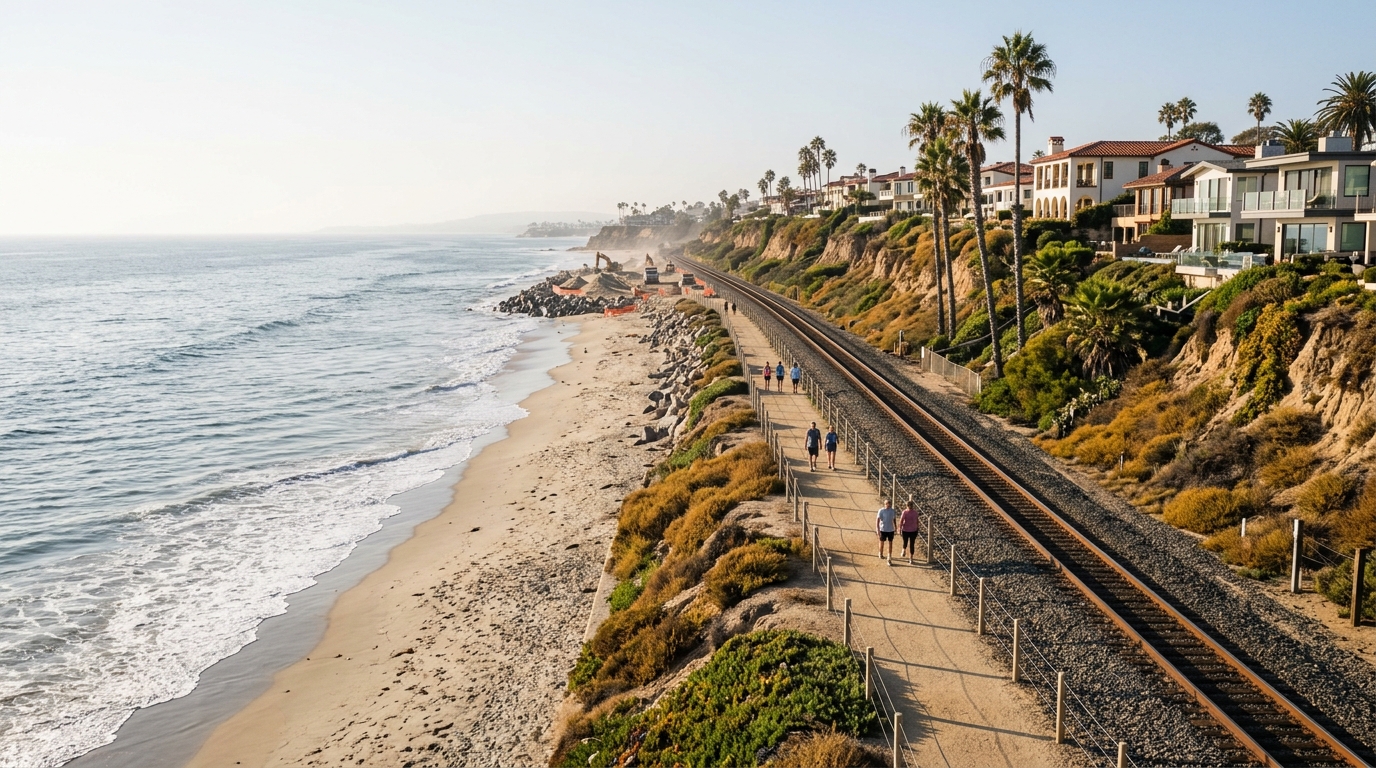
The San Clemente coastal rail emergency 2026 is now an important update for anyone planning a trip along the southern Orange County coast. The Orange County Transportation Authority, or OCTA, declared a new emergency in late September. The agency wants to speed up work that protects the railroad from erosion, strong waves, and severe winter conditions.
The work affects more than trains. Parts of the San Clemente Beach Trail remain closed while crews restore the trail and build protection near the tracks. Some beach access points also have temporary restrictions.
For visitors, this means a normal-looking coastal map may not reflect the route available on the day of travel. A walking plan between North Beach, El Portal, and Linda Lane may change because of construction.
This guide explains what OCTA is doing, which trail sections remain affected, and how to plan a San Clemente visit without relying on outdated access information.
What the San Clemente Coastal Rail Emergency 2026 Means
The coastal railroad through San Clemente is part of the LOSSAN Rail Corridor. This important route links San Diego, Orange County, Los Angeles, and communities farther north.
However, the tracks run through a difficult section of coastline. Steep bluffs rise beside the railroad in some areas. Waves and beach erosion affect the other side.
OCTA has been working on several emergency projects to protect the corridor. The agency identified locations where unstable slopes and erosion create immediate risks to rail operations.
Recent conditions showed that the problem has not disappeared. In September, powerful waves and high tides damaged the coastal slope near the tracks. Passenger rail service stopped temporarily while crews inspected and stabilized the area.
Why OCTA Declared Another Emergency in September
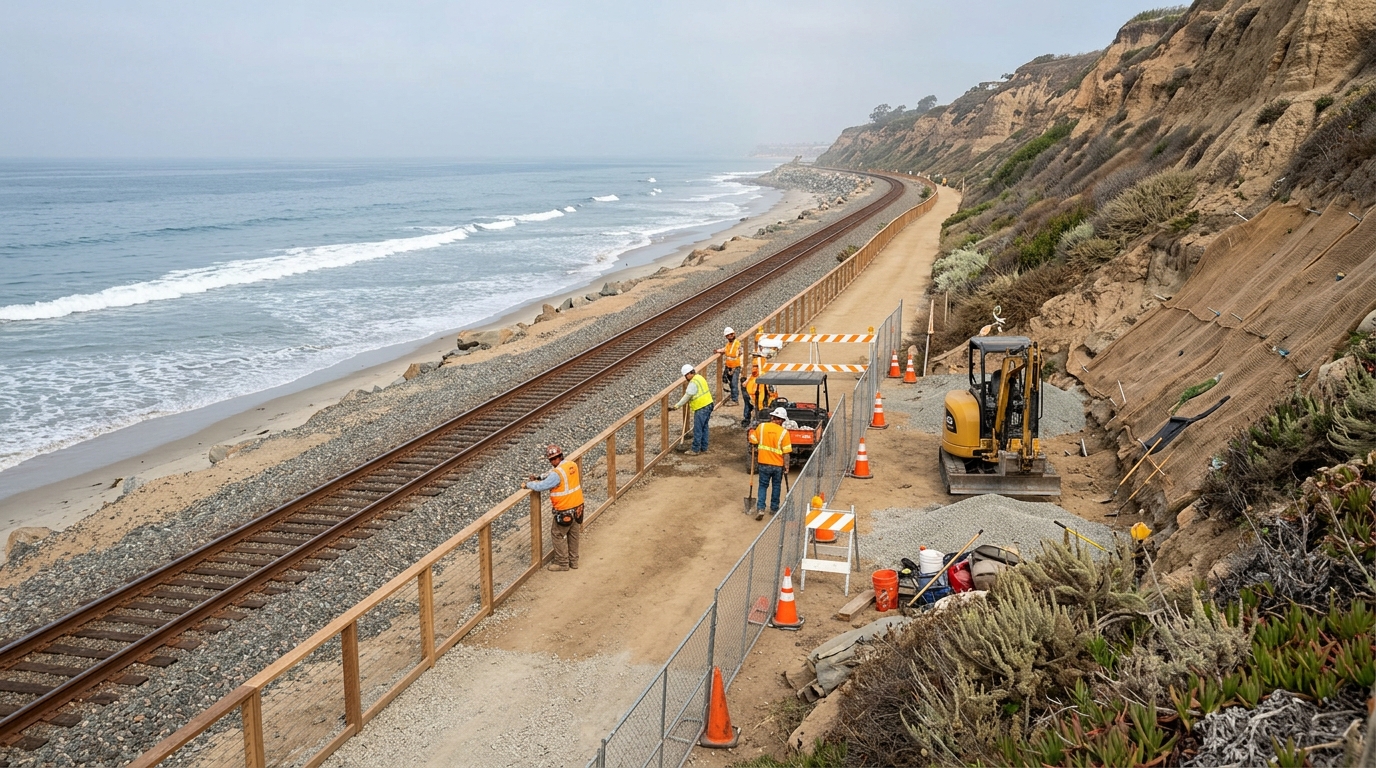
On September 28, the OCTA Board declared an emergency along the coastal rail line. The action gives the agency more flexibility to move quickly on shoreline protection.
OCTA wants to secure contractors, equipment, materials, and sand sources before severe fall or winter weather arrives. The agency has also pointed to possible El Niño conditions as a reason to move faster.
The goal is not only to repair damage after a storm. OCTA is trying to reduce the chance that future waves or erosion will interrupt the railroad again.
About 690,000 Cubic Yards of Sand Could Support Coastal Protection
The latest emergency action refers to roughly 690,000 cubic yards of sand. OCTA wants to place large amounts of sand along parts of the San Clemente shoreline.
Sand can provide added beach width between waves and the railroad. It can also work with other protection methods already used along the corridor.
Some sections have rock protection known as riprap. Other areas use walls or engineered structures. The right method depends on the location and the type of risk.
OCTA has already completed a smaller sand placement at North Beach. The larger program would be far more extensive.
Visitors should not assume all planned sand will appear at once. Coastal permits, equipment, sand sources, weather, and construction schedules can affect the timing.
For official project updates, use the Orange County Transportation Authority Coastal Rail Emergency Projects page.
The Work Is About Both Immediate Repairs and Longer-Term Resilience
Emergency construction deals with problems that need attention now. OCTA is also studying how to protect the coastal railroad over a longer period.
The broader study covers about seven miles through Dana Point and San Clemente. It looks at options that could help the existing railroad remain reliable for decades.
That study is separate from the work visitors can currently see near the beach. The distinction matters.
A long-term proposal may take years to study and approve. Emergency walls, trail restoration, sand placement, and erosion repairs are happening on a much shorter timeline.
Travelers should therefore plan around current construction notices rather than maps of possible future rail projects.
What the Work Means for the San Clemente Beach Trail
The San Clemente Beach Trail runs beside one of the most scenic parts of the city’s coast. It also passes close to the railroad.
That location makes the trail especially useful for walking between coastal areas. It also means rail protection work can affect pedestrian access.
OCTA’s Area 3 project includes a 1,400-foot catchment wall near Mariposa Point. The wall runs along the bluff side of the tracks between the El Portal area and Linda Lane.
The same project includes restoration of the pedestrian trail. OCTA currently expects the affected trail section to reopen when the project reaches completion in fall 2026.
North Beach, El Portal and Linda Lane Do Not Have the Same Access
Current trail access is divided into sections. The portion between the North Beach parking area and El Portal may close during work hours. OCTA says this section can reopen after the workday and remains open on Sundays under the current schedule.
The section between El Portal and Linda Lane has a larger restriction. It remains closed until project work is complete.
OCTA also lists the Mariposa underpass as closed. Other beach access restrictions can change as crews move through the project.
That makes the official detour map important. Do not assume that an entrance used on a previous visit will still work today.
Construction barriers should also be treated as real closures. Do not walk around a fence because the beach or trail looks open on the other side. Heavy equipment and rail activity may be operating beyond the public area.
If a continuous beach walk is the main reason for your trip, confirm the current trail status before driving to San Clemente.
How to Plan a San Clemente and Orange County Coast Trip During the Work
The coastal rail project does not mean visitors need to avoid south Orange County. It does mean the day should have some flexibility.
Start by deciding what matters most. A beach visit, coastal walk, train trip, restaurant stop, and long trail walk each require different planning.
If your main goal is the Beach Trail, check OCTA’s current construction page first. Then check local beach access information.
If you simply want a coastal day, keep a backup location ready. Orange County has several beach and bluff areas that do not depend on this project corridor.
Our Crystal Cove State Park guide is one alternative. It covers beach entrances, tidepools, trails, parking, and the Historic District. Crystal Cove is a separate destination, so do not treat it as a quick walking detour from San Clemente.
Build the Day Around Current Access, Not an Old Itinerary
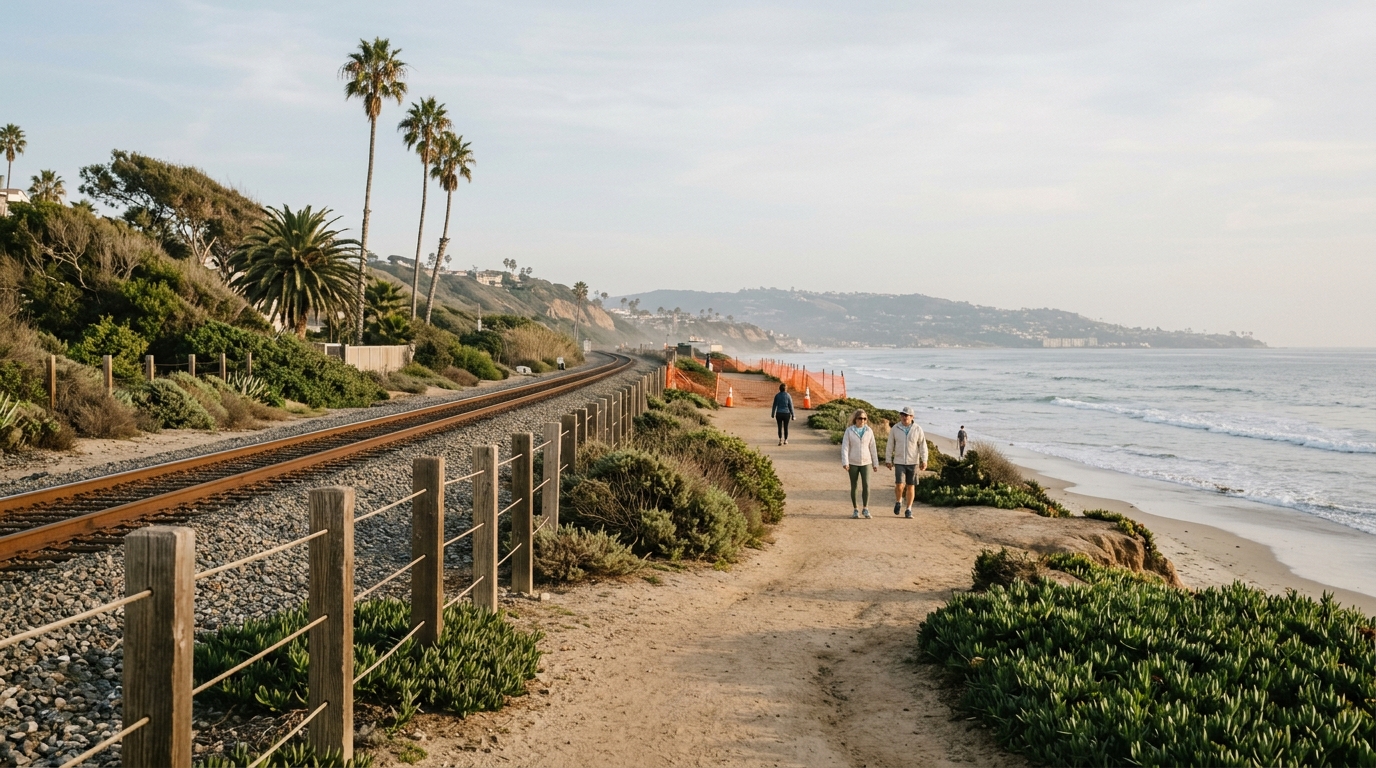
Construction information can change faster than a travel article. That is especially true when waves, tides, storms, or unstable slopes affect the work.
Use the newest official notice on the morning of your trip. Look for trail closures, beach access restrictions, and rail alerts.
Then keep your itinerary geographically simple. Driving between several coastal cities can add more time than expected.
Our one-day Orange County itinerary recommends focusing on one corridor. That approach works especially well during active coastal construction.
A San Clemente day might focus on one open beach area, a nearby meal, and one short walk. There is no need to force a complete north-to-south trail route when part of the path is closed.
Rail Passengers Should Check Service on the Day of Travel
September showed how quickly rail conditions can change. Strong waves and high tides temporarily closed the track through San Clemente.
Metrolink and Amtrak Pacific Surfliner service can also change during planned construction windows. A train listed on a normal timetable may not operate when a full track closure is scheduled.
Do not rely on a schedule saved weeks earlier. Check the current Metrolink or Pacific Surfliner service alert before leaving for the station.
If rail service is essential to your trip, look at the return journey too. It is easy to focus on the morning train and forget that construction may affect the trip home.
Drivers should also expect work near North Beach and other construction areas. Follow temporary signs and avoid using staging areas as visitor parking.
For a broader coastal weekend, our Orange County weekend guide can help you keep destinations close together instead of crossing the county several times.
The San Clemente coastal rail emergency 2026 is bigger than one trail closure. It reflects the challenge of keeping a major rail corridor operating beside an active coastline.
OCTA is moving forward with walls, erosion protection, trail restoration, and large-scale sand placement. At the same time, crews must respond when waves or unstable slopes create new problems.
For visitors, the practical lesson is simple. Check current access before arriving. Do not enter closed construction zones. Keep a second coastal option ready. Verify rail service if your trip depends on a train.
The San Clemente coast remains worth visiting. The best experience in fall 2026 will come from planning around what is actually open instead of trying to follow an older route exactly.
As the trail restoration reaches completion, access should improve. Until OCTA announces that the closed section has reopened, treat the fall 2026 date as an expected milestone rather than a guaranteed opening day.