
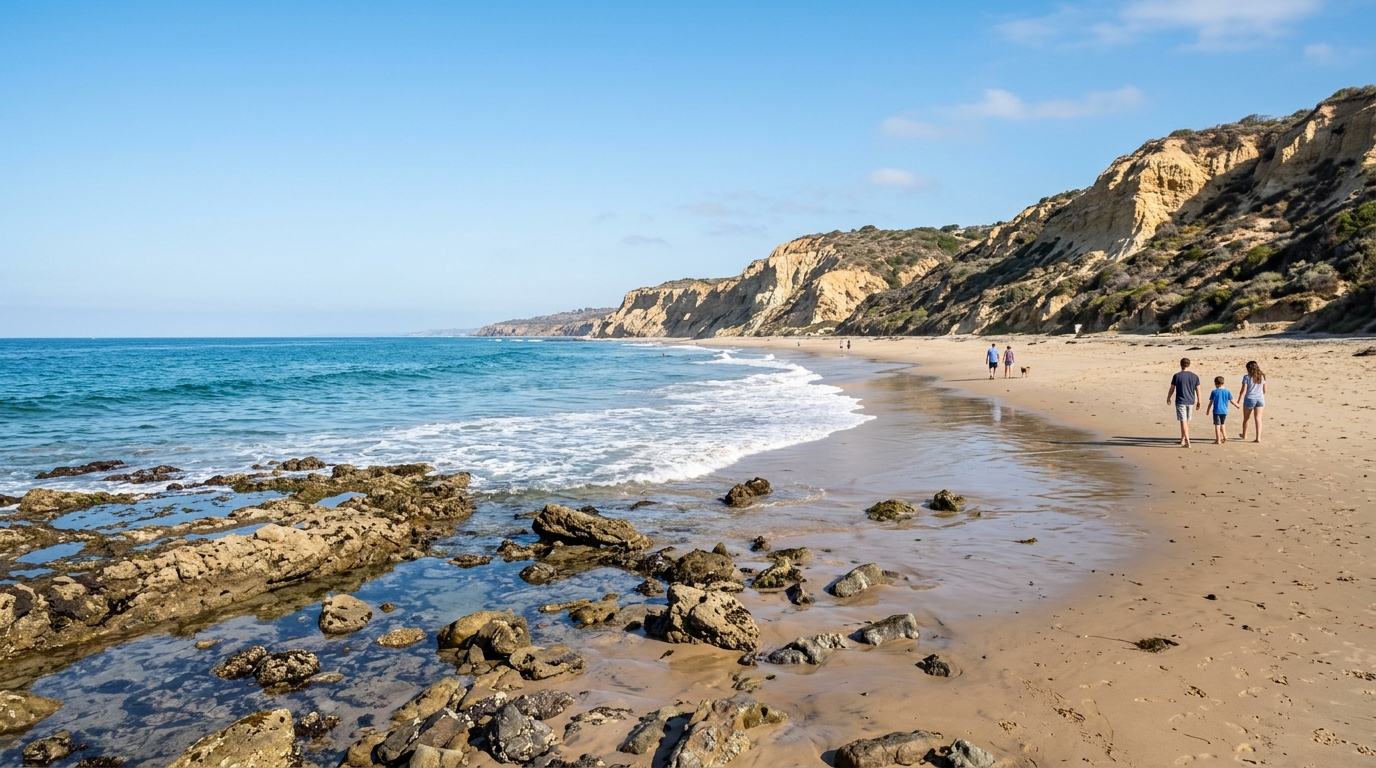
Crystal Cove State Park can look like one simple beach destination on a map, but a successful visit depends on choosing the right entrance before you drive. The park stretches between Corona del Mar and Laguna Beach and combines 3.2 miles of shoreline, rocky tidepools, a federally listed Historic District and a large backcountry trail system. Those areas do not all share the same parking lot or the same easiest access route.
As of July 2026, California State Parks lists day-use hours from 6 a.m. to sunset, while the Historic District remains open until 10 p.m. Regular vehicle day use is listed at $15, with a $20 special holiday, seasonal or weekend rate. Fees and operating conditions can change, so check the official Crystal Cove State Park page on the day of travel.
This guide focuses on a realistic day trip rather than trying to cover the beach, tidepools, cottages and backcountry in one rushed visit. For broader planning, use the site’s Orange County parks and outdoors guide, beaches and harbors guide and family travel guide.
Plan Around the Part of Crystal Cove You Actually Want to Visit
Crystal Cove has four principal entrances: Pelican Point, Reef Point, Los Trancos and the School/State Park entrance serving the Moro area. Entering the wrong lot can add a long walk, a highway crossing through an underpass, or an inconvenient return at the end of the day. Decide whether the priority is the Historic District, tidepools, a sandy beach or a backcountry hike.
Choose the Parking Area Before You Start Driving
For the Historic District, the standard parking area is the Los Trancos lot on the inland side of Pacific Coast Highway. Visitors can use the pedestrian path and tunnel or take the paid shuttle. For a straightforward beach day, Lower Moro provides a direct walk through a tunnel toward the sand. Reef Point and Pelican Point are stronger choices for bluff access and several tidepool areas.
Parking systems can differ by lot. Los Trancos currently offers hourly parking, while other day-use lots generally charge the posted full-day fee. Do not rely on an old social-media post or assume roadside parking is legal. Read every restriction and keep proof of payment visible when required.
Historic District Access Starts at Los Trancos
All general visitor parking for the Historic District, Park Store, Beachcomber Café and beach cottages is across the highway in the Los Trancos lot. The walking route begins near the southern end of the lot, follows a roughly half-mile path and passes through a tunnel beneath Pacific Coast Highway. The park estimates about ten minutes for the walk, although families, older visitors and anyone carrying beach equipment may need longer.
The shuttle is currently listed at $1.50 each way, with children under 12 riding free. It has a wheelchair lift, and passengers with disabilities may ride without charge. Confirm service and pricing on arrival. The tunnel may close during rain, changing access even when the coastal area remains open.
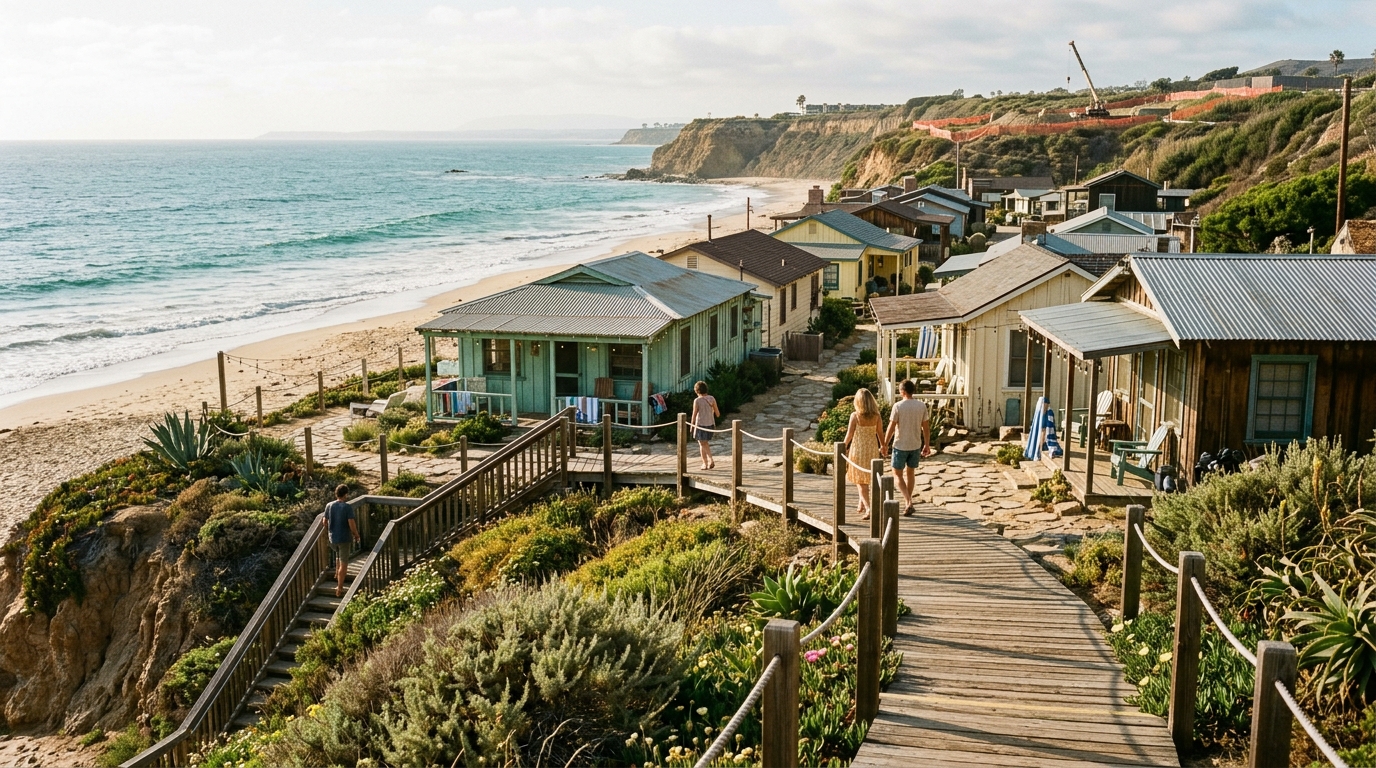
The Historic District contains 46 vintage cottages dating from the early seaside-colony period. Restored cottages operate as overnight lodging, but a reservation is not required simply to walk through public portions of the district. Phase III restoration work remains active in 2026, generally on weekdays, so visitors may see barriers, equipment or work near some upper-bluff cottages. Construction does not turn the area into an unrestricted worksite; stay on public paths and respect closed zones.
Beach and Tidepool Entrances Serve Different Sections
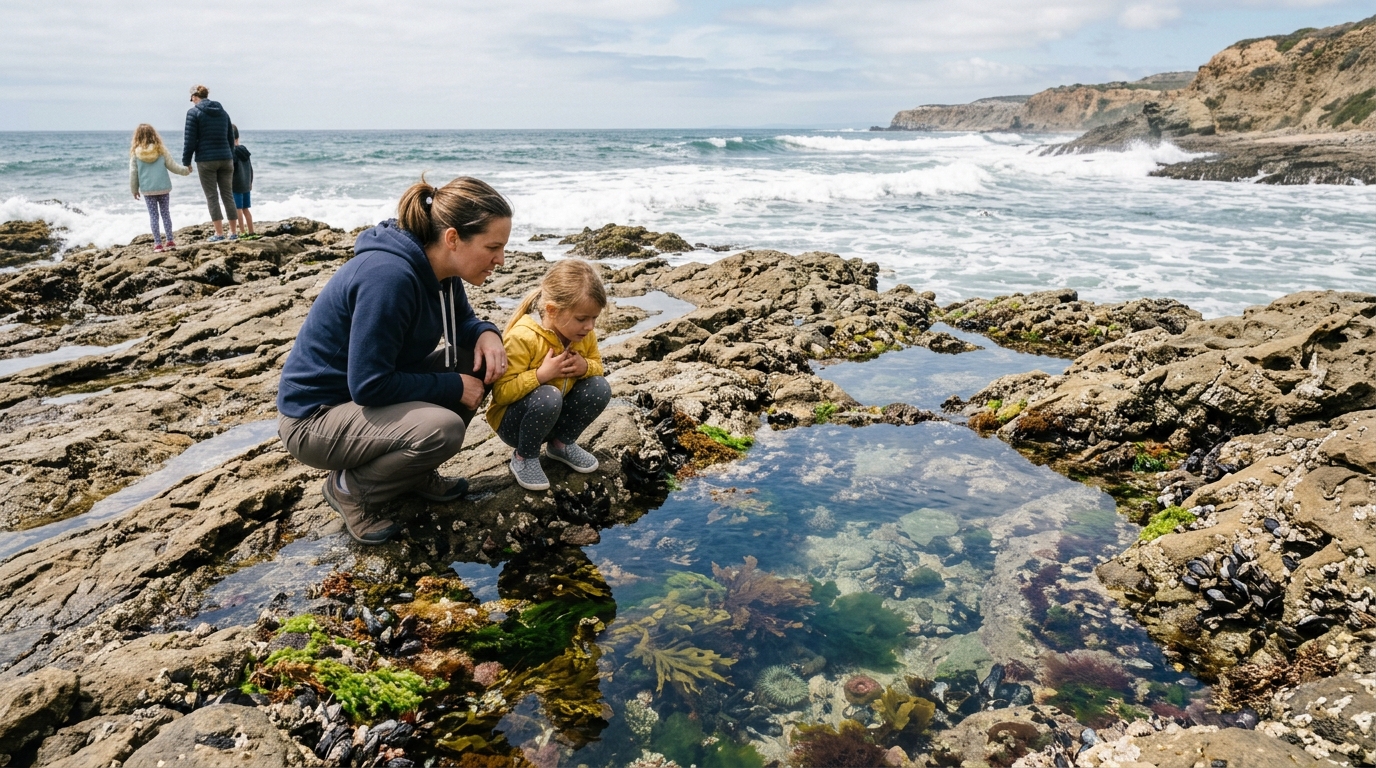
Crystal Cove identifies four principal tidepool viewing areas: Reef Point, Rocky Bight, Pelican Point and Treasure Cove. Reef Point and Pelican Point have bluff-top parking and stair or ramp access to sections of the coast. Rocky Bight is reached from the Historic District side, while Treasure Cove is farther along the northern coastal area. The best choice depends on tide timing, walking ability and the amount of gear you are carrying.
Stairs, uneven rock, wet algae and changing surf make tidepool access very different from a paved overlook. A route that suits one traveler may not work for a stroller, limited mobility or a young child. The Historic District and Lower Moro offer free beach wheelchairs on a first-come basis, but availability is not guaranteed. Confirm accessibility needs with park staff before traveling.
Build a Responsible Tidepool and Beach Visit
Tidepools should be planned around an appropriate low tide, but the tide table is only one part of the decision. Swell, wind, recent storms and the shape of the rocks affect safety. Check the NOAA tide information, then compare it with current weather, surf conditions and lifeguard guidance. Arrive before the predicted low point so the group is not chasing the water as it returns.
A Low Tide Does Not Guarantee Easy or Safe Access
Wear shoes with secure traction and keep both hands available for balance. Do not turn your back on the ocean or stand on an isolated rock where an incoming wave can cut off the return route. Children should remain within immediate reach of an adult. If surf is washing across the viewing area, use the bluff trail, sandy beach or Historic District instead of forcing a tidepool visit.
Swimming conditions also vary. The park recommends paying attention to weather and ocean conditions and swimming near a lifeguard when possible. Crystal Cove is a natural coastline, not a controlled lagoon. Rip currents, shore break, cold water and submerged rock can be present even on a clear day.
Protect Marine Life and Follow Collection Rules
Look closely without handling the habitat. Do not pick up animals, peel organisms from rocks, overturn stones or walk through pools when a dry route exists. Park rules prohibit taking shells, sand, rocks, living creatures and material from the tidepools. Even an empty shell may provide habitat or contribute to the protected coastal system.
Drones are not allowed in the park. Dogs are limited to paved areas and must remain leashed; except for service animals, they are not allowed on the beach or in the backcountry. Open fires are prohibited, and other equipment rules may apply. Review the park’s current rules rather than assuming that conduct allowed at another Orange County beach is allowed here.
Pack out all trash, avoid feeding wildlife and give resting birds or marine mammals plenty of space. Leave the shoreline undisturbed for the next visitor.
Add a Trail or Historic Stop Without Overloading the Day
The backcountry contains approximately 2,400 acres of wilderness and a network of hiking routes ranging from an easier Moro Canyon out-and-back to steep ridge loops. Summer heat can make exposed climbs much harder than the mileage suggests. If tidepools are the main goal, choose only a short bluff walk or Historic District visit afterward. If hiking is the priority, start early and treat the beach as an optional cooling stop rather than a required second itinerary.
Match the Route, Heat and Closing Time to Your Group
The official trail descriptions list a three-mile Moro Canyon out-and-back as an easier option, a roughly 2.85-mile moderate loop using No Dogs, Poles and Moro Canyon, and longer routes with substantial climbing. Distances and estimated times are guides, not promises. Carry more water than you expect to need, use sun protection and turn around before fatigue makes the descent unsafe.
Backcountry trails close before, during and after rainfall, and they may remain closed while soil conditions are evaluated. Check the park-status notice or call the ranger station before driving. Entering from a neighborhood trailhead does not override a park closure. Fire conditions can also affect access.
A balanced first visit might begin with an early tidepool window at Reef Point, continue with a bluff walk and finish before closing. Another option is to park at Los Trancos, visit the Historic District and beach, then return before evening. Adding a strenuous backcountry loop can turn either plan into a logistical problem.
Keep valuables out of sight and do not leave wallets, electronics or beach bags in the vehicle. The park warns about occasional vehicle burglaries. Photograph the parking location, save the route back to the lot and note whether your area closes at sunset or at 10 p.m.
Before leaving home, review current restrictions, tide timing, trail status and parking instructions. The 2026 cottage-restoration project may create visible weekday construction, but official notices say public access to park facilities remains available. Conditions can still change without much warning.
Crystal Cove rewards focused planning. Pick one primary experience, choose the matching entrance and leave enough time for the walk back. For car-light options elsewhere on the coast, see the Orange County summer shuttle guide. Orange County California is an independent travel guide and is not affiliated with California State Parks, Crystal Cove Conservancy or any government agency.