
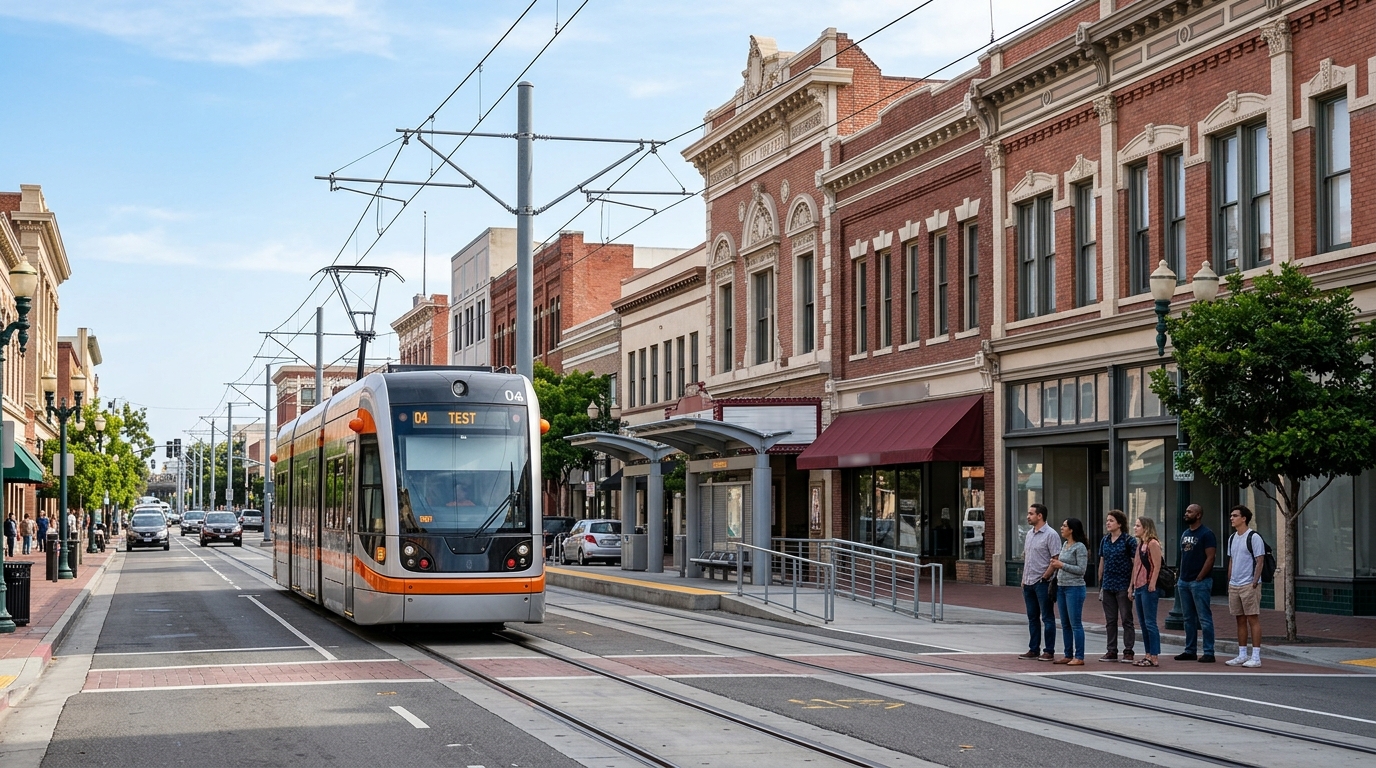
The OC Streetcar is one of Orange County’s most visible transportation projects, running through Santa Ana and into Garden Grove. Tracks, platforms, overhead power lines and streetcar vehicles can now be seen along the corridor, which makes the system look close to opening. However, seeing a vehicle on the rails does not mean passenger service has begun.
As of July 29, 2026, the latest public information from the Orange County Transportation Authority indicates that the streetcar remains under construction and testing. OCTA’s project pages still contain references to a 2026 debut, but a June 22, 2026 board-action summary says service is expected to launch “next year.” Travelers should therefore treat 2027 as the current broad expectation and wait for a formally announced opening date before planning a ride.
The 4.15-mile electric line is designed to connect the Santa Ana Regional Transportation Center with a new transit hub near Harbor Boulevard and Westminster Avenue in Garden Grove. Between those endpoints, it will serve Downtown Santa Ana, the Civic Center and neighborhoods along the former Pacific Electric right-of-way. This guide explains what is confirmed, what visitors may see during testing and how the line could fit into a future Orange County itinerary.
For current options that are already carrying passengers, see the Orange County transportation guide, the free summer shuttle guide and the OC Fair Express guide.
What the OC Streetcar Route Will Connect
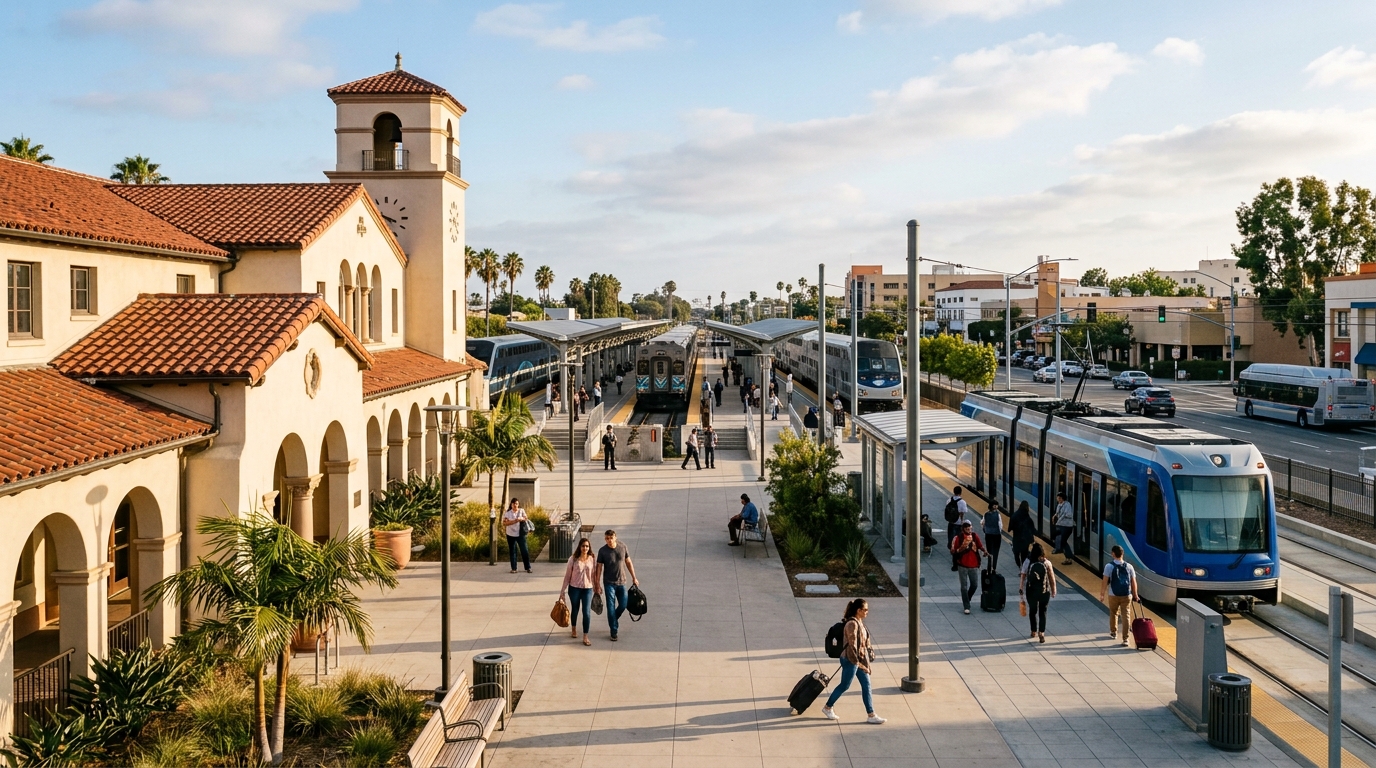
The streetcar is not intended to cross the entire county or run directly to the coast, Disneyland or John Wayne Airport. It is a focused urban transit line serving central Santa Ana and a portion of Garden Grove. Its strongest value will come from connecting local destinations with regional trains and existing bus routes.
From the Santa Ana Train Station Through Downtown
The eastern endpoint is the Santa Ana Regional Transportation Center, often abbreviated as SARTC. The station is served by Metrolink, Amtrak Pacific Surfliner and local transportation services. Once streetcar passenger operations begin, visitors arriving by regional rail should be able to transfer there for a trip toward Downtown Santa Ana and the western end of the line.
SARTC Will Be the Main Regional Rail Connection
SARTC is important because it can turn the streetcar into the final urban segment of a longer journey. A traveler coming from Los Angeles, northern Orange County or parts of the Inland Empire may be able to arrive by train and continue west without using a car for the downtown portion of the visit. Exact transfer timing will depend on the final streetcar timetable and the schedule of the arriving train.
The route travels along Santa Ana Boulevard before entering the downtown and Civic Center area. In central Santa Ana, the tracks use a one-way circulation pattern, with service divided between Santa Ana Boulevard and Fourth Street before rejoining. Visitors should not assume that the return platform will always be directly across the street from the arrival platform. The direction of travel and platform location will matter.
Downtown Santa Ana contains restaurants, independent businesses, cultural spaces, historic buildings and public institutions, but the streetcar should not be treated as a sightseeing ride by itself. A practical visit will still involve walking between the platform and the destination. Review the site’s arts and culture guide and food and drink guide when building a future downtown itinerary.
The Western End Will Serve Garden Grove Connections
West of Downtown Santa Ana, the route follows the former Pacific Electric corridor toward Garden Grove. The western endpoint is planned near Harbor Boulevard and Westminster Avenue, where a new transit center is intended to connect the streetcar with bus service.
This endpoint is not in the Anaheim Resort and is not a direct stop at Disneyland. Harbor Boulevard continues for several miles through Orange County, so travelers must check the actual location instead of assuming every Harbor Boulevard transit service reaches the same attractions. A bus transfer may be necessary for destinations farther north or south.
OCTA says the line will include 10 station locations in each direction and connect with numerous existing bus routes. Final rider maps should be used after service begins because temporary construction maps may not show platform access, transfers or pedestrian crossings in the same way as the final operating map.
Testing Is Underway, but the System Is Not Open to Riders
Streetcar testing is a required stage before public service. It allows the operator to check vehicles, tracks, power systems, signals, communications, braking, intersections and operating procedures. Testing can take place at different speeds and during different hours, sometimes with crews stationed along the corridor.
What Residents and Visitors May See During Testing
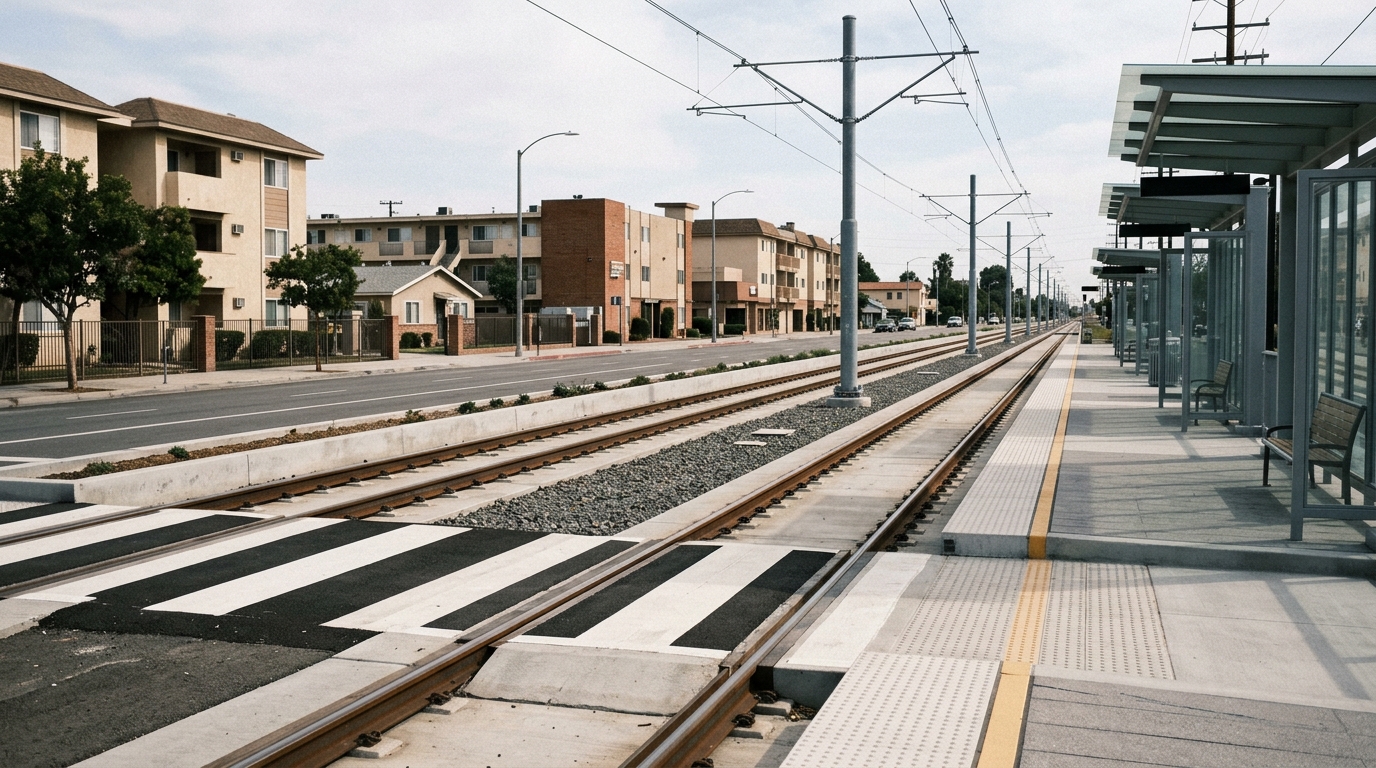
People along the route may see streetcar vehicles moving without passengers, stopping at platforms, sounding warning bells or traveling repeatedly through the same section. Workers may also adjust signals, overhead equipment, pavement, landscaping or station features. These activities are not a soft opening and do not give the public permission to board.
Never step onto a platform that remains closed, cross tracks through a work zone or enter a maintenance area for photographs. Follow temporary signs and staff instructions. Streetcars are quieter than many buses and cannot steer around a person or vehicle blocking the rails. A vehicle that appears to be stopped may begin moving as part of a test.
Drivers should expect unfamiliar lane patterns and rail-specific signals, particularly in central Santa Ana where streetcars will share parts of the street environment with cars, cyclists and pedestrians. Do not stop on the tracks while waiting at an intersection, and do not turn in front of an approaching streetcar. OCTA’s official streetcar safety information should be reviewed by anyone who regularly travels through the corridor.
How to Plan for the Streetcar Without Assuming It Is Open
The useful approach in 2026 is to learn the route while continuing to use operating services. A traveler can already reach Santa Ana by Metrolink, Amtrak or OC Bus and can explore downtown on foot or through available local connections. Route 862 has been used between SARTC and the Civic Center during the construction period, but riders should check OCTA’s current schedules because bus service can be revised as the streetcar opening approaches.
Wait for Official Fares, Hours and Opening Instructions
Earlier project materials describe frequent service, modern low-floor vehicles and connections with major bus routes, but preliminary operating details are not the same as a final passenger schedule. Do not publish or rely on a fare, first-day timetable or service frequency until OCTA posts the operating information in its rider tools.
The vehicles are designed for level boarding and the stations are being built as part of a modern transit system, but passengers with mobility devices, strollers, bicycles or other large items should wait for final boarding policies. Accessibility does not mean every path from a station to a nearby business is level or obstruction-free. Construction, sidewalk conditions and private-property entrances can affect the last part of the trip.
Build a Backup Plan for the First Months of Service
When a confirmed opening date is announced, first-time riders should allow more time than a route map suggests. New systems may experience crowding, service adjustments or temporary delays during their introductory period. Save the current OC Bus alternatives, check the last regional train from SARTC and know how far you can comfortably walk if a connection is missed.
A realistic visitor itinerary should focus on one or two areas. For example, arrive at SARTC, ride to Downtown Santa Ana, spend several hours walking through the district, and return with time to spare before the train home. Trying to combine the streetcar with distant coastal destinations in the same short visit may create unnecessary transfers.
The most important limitation is the timeline. OCTA’s main project page still references a 2026 debut, while the agency’s June 22, 2026 board summary states that passenger service is expected next year. That newer statement indicates a delay, but it does not by itself provide a guaranteed public opening day. The safest wording is that the OC Streetcar is in testing and is currently expected to begin service in 2027, subject to official confirmation.
Before traveling specifically to ride, check the official OC Streetcar project page, OCTA rider alerts and the agency’s latest news releases. A vehicle moving on the tracks is not proof that service has started.
The OC Streetcar could become a useful connection between regional rail, Downtown Santa Ana and Garden Grove, but the responsible 2026 advice is simple: observe testing safely, continue using established transportation and wait for a confirmed passenger-service announcement. Orange County California is an independent travel guide and is not affiliated with OCTA, the City of Santa Ana, the City of Garden Grove or any government agency.